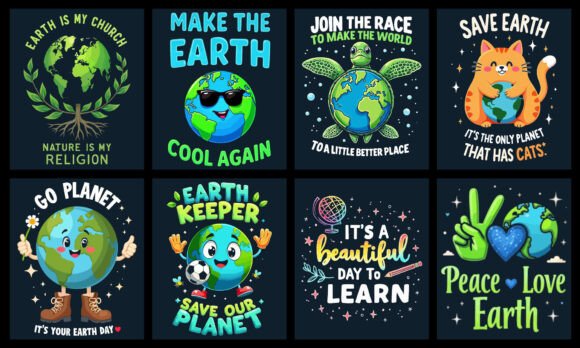
Peace Love Earth T-Shirt Design
A Grounded First Impression
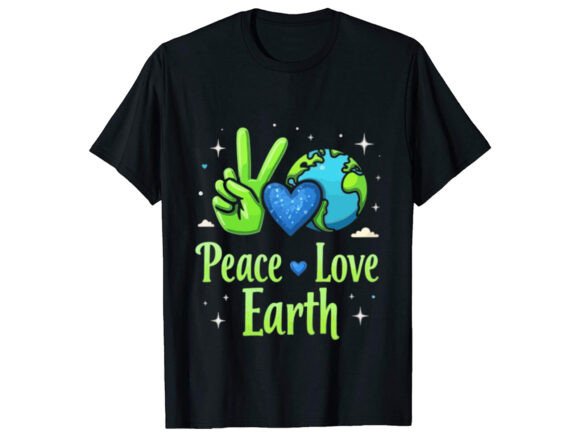
When I opened the Peace Love Earth T-Shirt Design, what struck me first wasn’t just the familiar triad of symbols—it was how calmly it settled into the frame. The layout breathes: a centered earth motif, softly cradled by minimalist peace and love icons, all rendered with clean, uncluttered lines. It’s not loud or busy—no aggressive gradients, no over-rendered shadows, no forced “vintage” texture. That simplicity is its quiet strength. As an embroidery designer who’s stitched hundreds of nature- and values-driven motifs, I immediately saw its potential on organic cotton totes, unbleached aprons, and baby onesies—pieces where sincerity matters more than flash.
How It Translates to Real Embroidery Projects
I tested this design on a medium-weight canvas tote bag—my go-to for client gift projects—and the results were reassuringly consistent. The earth element holds up beautifully in satin stitch, especially when paired with matte cotton thread. The peace sign and heart read clearly even at 3.5 inches wide, thanks to generous negative space and well-proportioned strokes. No tiny filigree or fragile loops to snag during hooping or washing. That makes it ideal for sweatshirt embroidery, embroidered patch production, and baby embroidery, where durability and legibility trump decorative complexity.
It also works cleanly as a tote bag design centered on the front panel—or scaled down for a subtle cap brim accent. On a light heather hoodie, the contrast stayed warm and inviting; on charcoal denim, I switched to ecru thread and kept the stitch density moderate—no puckering, no stiffness. For holiday embroidery (think Earth Day bundles or sustainable wedding favors), it adds grounded meaning without feeling preachy. And yes—it holds up in a printable mockup for Etsy listings. Buyers respond to that gentle confidence.
Where Caution Is Warranted
This isn’t a one-size-fits-all machine embroidery design. Its open shapes and soft edges don’t translate well to very small hoop sizes—under 4 inches, the earth detail starts to lose definition. Avoid cramming it onto curved surfaces like baseball caps unless you’re using a low-profile stabilizer and reducing density by 15–20%. On stretchy fabric (like jersey tees), skip direct-hooping: use cutaway + topping, and consider simplifying the outer contour with a running stitch outline instead of dense fill.
Dark fabric demands attention: the PNG file is print-ready, but for embroidery, test your thread colors against black or navy first. Some versions of this motif rely too heavily on thin outlines—this one doesn’t, but always inspect the smallest curves in the peace sign’s arms. If your machine struggles with tight corners, run a quick test on scrap fabric before committing to a batch of personalized gifts.
Stabilizer & Fabric Texture: Non-Negotiables
The Peace Love Earth T-Shirt Design leans into clarity—not texture. So on highly napped fabrics (terry cloth towels, fleece blankets), reduce fill stitch density and add a tear-away topper. On delicate linen tea towels? Use lightweight cutaway and avoid satin-stitch-heavy areas near seams. For kitchen towel or pillow cover applications, I recommend stitching the earth in tone-on-tone thread and letting the peace/love elements pop in contrast—adds quiet sophistication.
What It Says About Your Brand—Without Saying a Word
As a craft business owner or Etsy seller, your designs signal your values faster than any bio. This Graphics file doesn’t shout “eco-friendly”—it embodies it through restraint, balance, and timeless shape language. Customers notice that. I’ve seen repeat buyers specifically ask for “that calm earth design” on custom nursery decor orders. It builds customer trust because it feels handmade in spirit—even when stitched digitally. That authenticity lifts perceived value: a $28 embroidered apron with this motif sells more consistently than flashier alternatives.
For boutique branding or small shop merchandise, it pairs effortlessly with neutral packaging and hand-lettered tags. No need to over-explain. Its recognition grows quietly—across holiday markets, local fairs, and Instagram posts—because it’s memorable without being gimmicky.
Practical Designer Notes Before You Stitch
- Always test the embroidery file on scrap fabric matching your final product’s weight and stretch.
- Review stitch density in your editing software—look for heavy fill areas that could cause stiffness on baby items or towels.
- Confirm hoop size compatibility early—especially if scaling for patches or cap fronts.
- Inspect small details at 200% zoom: check for stray nodes or overlapping paths in the SVG/EPS files.
- Test in black-and-white mockups—does the silhouette hold up without color cues?
- Compare light vs. dark background previews—some thread combos mute the earth’s dimensionality.
- Use appropriate stabilizer: cutaway for knits, tear-away for stable wovens, topping for napped textures.
- Verify licensing terms—Peace Love Earth T-Shirt Design is marketed for commercial use, but double-check scope before selling finished items or bundling as design assets.
Fitting Into the Bigger Picture
This isn’t just another T-Shirt Designs download. It’s a versatile, emotionally resonant anchor motif—one that supports storytelling across custom apparel, handmade product lines, and commercial embroidery work. I’ve used it as the central element in a trio of Earth Day kitchen sets (towel, apron, oven mitt), and as a standalone embroidered patch on recycled denim jackets for a local boutique. Each time, it landed with warmth—not trendiness.
If you’re curating digital embroidery files for your shop or building a cohesive collection of personalized gift options, this design earns its place not because it’s trendy, but because it’s reliable. It stitches cleanly, reads clearly, and stays true—whether on a child’s bib or a founder’s conference tote. In a landscape full of noise, that kind of quiet consistency is rare. And valuable.